01 15 min
Give your email a passphrase used nowhere else
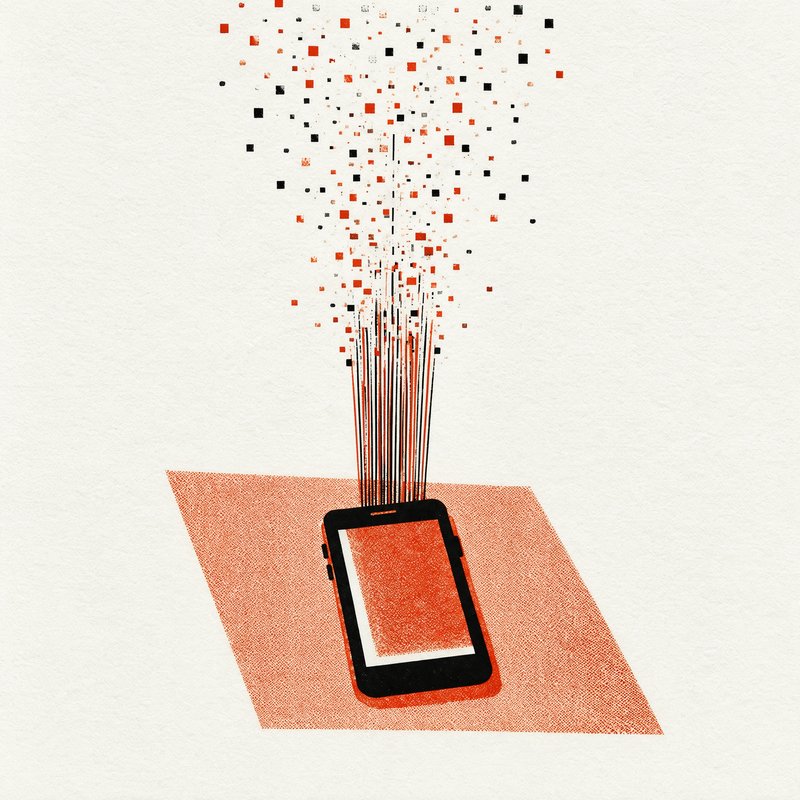
Four words and a number. Your email receives every password reset — it is the one that unlocks the rest.
No cookies · no analytics · no account
Online, offline, and the equipment where the two meet. What is collected about ordinary people — and the few things that actually help.
For people who are not security experts — and don’t want to become one.
What a stranger can know, without asking
None of this came from a breach. It was assembled from apps you installed, a loyalty card and cameras you walked past. Illustrative profile; the figures show how such profiles are scored, not a specific person.
Start here
No app, no account, nothing to buy. Most of the benefit is in the first two.
01 15 min
Four words and a number. Your email receives every password reset — it is the one that unlocks the rest.
02 5 min
A code or a passkey. It stops the vast majority of account takeovers, including the ones that follow a breach.
03 4 min
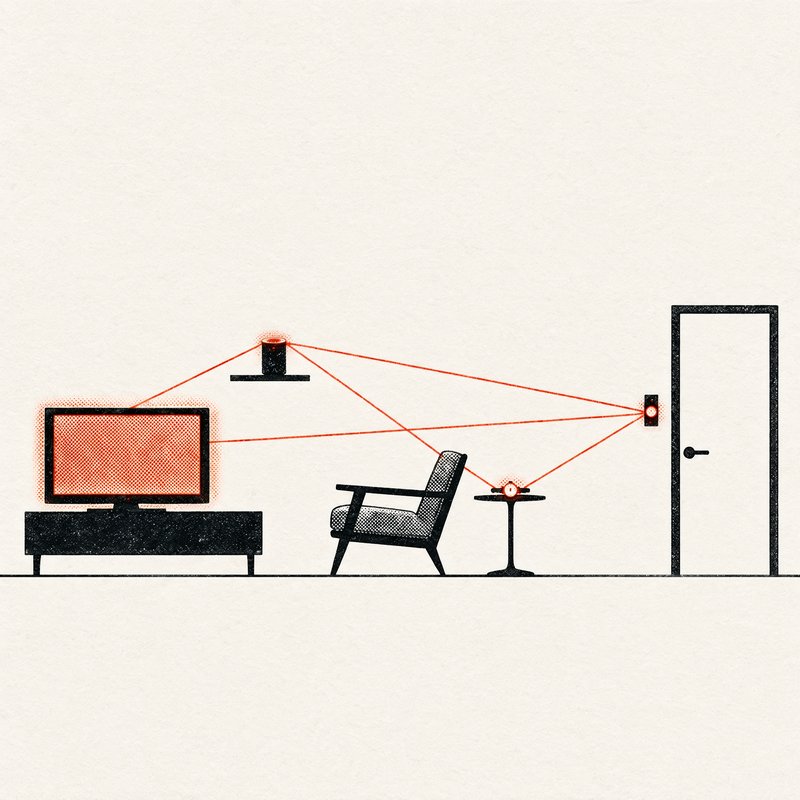
LG calls it Live Plus, Samsung Viewing Information Services, Roku Personalised ads. Off in settings, then again inside each app.
04 0 min
Screen privacy is geometry. Directly behind you, every word is legible; from the side, mostly headlines.
05 20 min
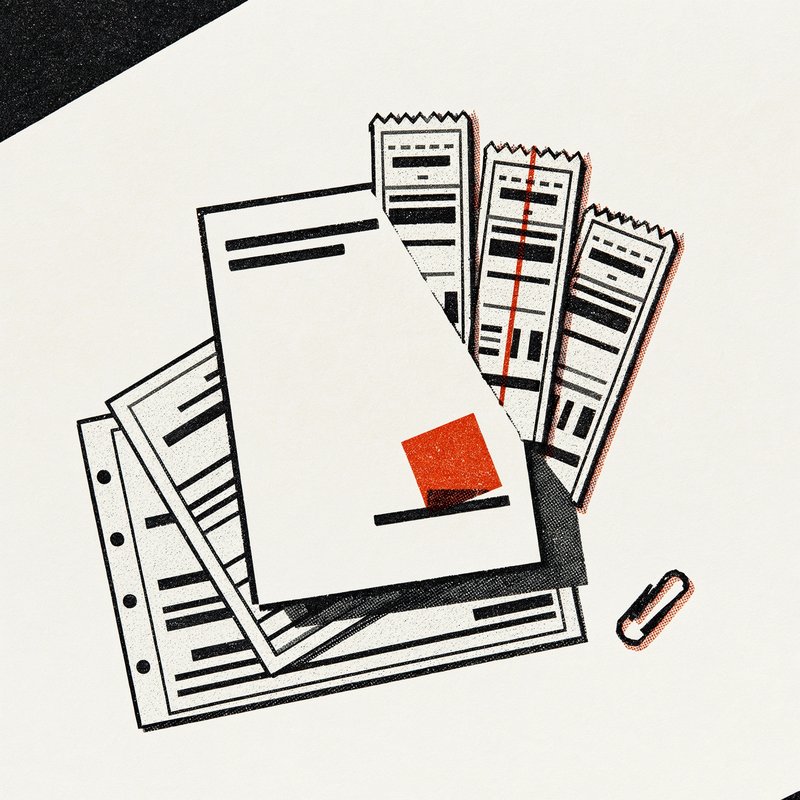
Statements, bills, payslips. The most useful document a fraudster can find is the one you threw away whole.
That is five of thirty. The 19-page guide puts the rest in order, with the letters to send when a company ignores you.
$9.99 · PDF
Get the full guideDefinition
Control over what is collected, who holds it, what it is used to decide, and when it is deleted. A private life is not a hidden life — it is a life where the terms are yours.
We did not trade this away. Somewhere in the forty pages you accepted in eleven seconds, a sentence decided what happens next. And then nobody read it — which was rather the point.
244 h — the time one study says it would take you to read every privacy policy you meet in a year. About six working weeks. McDonald & Cranor, “The Cost of Reading Privacy Policies”, 2008
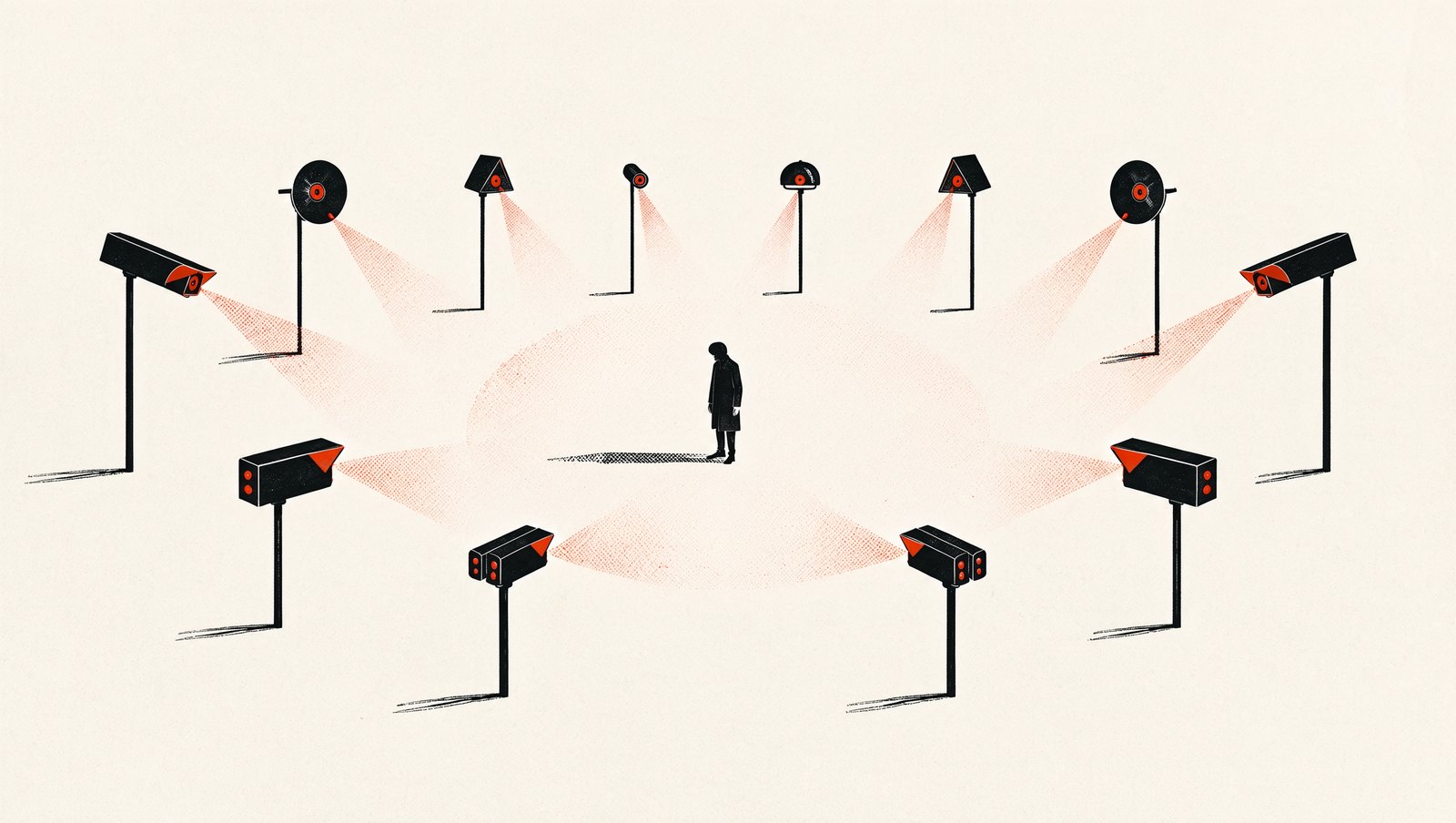
Most privacy advice lives entirely in the first world. But the records that decide your insurance quote, your loan and your job interview are often built in the other two.
01 / Online
A page loads and, before you read a word, it has described you to a dozen companies: your approximate location, your device, your interests from other sites, and how likely you are to spend money today. You are not the visitor. You are the payload.
02 / Offline
Your postcode, your prescription, the letter you threw out and the conversation you had by the window. Offline data is not less sensitive — it is simply harder to delete, because it was never in a database you can log into.
03 / In between
A doorbell, a tap, a car, a wrist that counts steps. Each one is a small translator that turns a physical gesture into an identifier — and identifiers are what make separate records into one life story.
Eight moments from a Tuesday. None of them is dramatic. Together they are a file.
07:10
The alarm goes off
Sleep cycle, first phone unlock of the day, home Wi-Fi rejoin.
in between
07:40
Commute
Transit tap: station, time, card ID. Phone pings three cell towers.
offline
08:15
Coffee
Card payment: merchant, amount, 08:15. Camera over the counter.
in between
09:00
At the desk
Door badge, laptop VPN, calendar invites, every email’s metadata.
online
12:30
Lunch, phone on the table
Two-step location fix, app beacons, ambient noise if a mic is on.
in between
18:30
The supermarket
Loyalty card plus card payment: every item tied to your name.
in between
21:00
Something to watch
Watch history, what you skipped, household IP shared by three people.
online
23:30
Sleep
Movement and heart rate from a wearable; router logs device uptime.
in between
Not one line of this required a hacker. It required only that you took part in ordinary life — and that the systems around you kept the receipts.

Six figures that explain the market around your personal life. Sources are listed in full in the toolkit.
$12.5B
Reported consumer fraud losses in the United States in a single year — up 25% on the year before.
FTC Consumer Sentinel Network, 2024 data book. 2.6 million reports; one in three people who reported a fraud lost money.
$270B
The global market for buying and selling personal data.
Around 5,000 data brokers operate worldwide (Proton, citing 2024 market estimates).
2.6B
People profiled by a single broker — more than a quarter of everyone alive.
Acxiom, as described in Proton’s data broker analysis: 10,000+ traits per person, 1.2 trillion records a month.
1.1B
Surveillance cameras in the world, by common industry estimates.
Roughly half are in one country. Per-person counts vary by a factor of hundreds between cities.
48%
People who accept every cookie without reading the notice.
Bitdefender Consumer Cybersecurity Survey, 2025. A further 27% skim it and click anyway.
65%
People who reuse the same password across sites — and 51% admit to a favourite.
Google / Harris Poll Online Security Survey. Stolen credentials are linked to roughly a fifth of breaches.
This is the whole business model in six steps. Nothing here is illegal, and almost none of it was ever explained to you.
01
A game, a quiz, a discount, a map. The price is not money, so the price is you.
02
Software inside the app logs taps, opening times, location and device details.
03
Your email address, phone number and device ID are the same everywhere. That is how records join up.
04
Public records, purchases, surveys and inferences are merged into scored profiles.
05
Advertisers, insurers, lenders, employers, landlords, political campaigns, police.
06
A price, a quote, a shortlist, a risk score. Usually with no notice and no appeal.
The return arrow
Money flows back down the same pipe: the buyer pays for the score, the broker pays for the data, and you are paid in convenience. That is the trade. It is worth knowing what it is.
Take the three-minute check
Twelve questions, no account. It scores you and names where to start.
Read the world you actually live in
One page of plates and figures, not a list of rules.
Do the first five fixes, then stop
Most of the benefit is in the first few changes.
The full guide · PDF
Nineteen pages you can print, scribble on and hand to someone who is not going to read a website.
$9.99 one payment · no account
Get the guidePrivacy is not a personality. It is a handful of habits, done once, that keep making up for the things you cannot control.